Last week, we broke down the headlines of the 2025 Market Recap. We discussed the "Great Divergence"—how Durango prices soared while Pagosa Springs and Bayfield saw prices correct.
But if you are planning to buy or sell in 2026, knowing the numbers isn't enough. You need to know what they mean for your strategy.
Because the market has split, the "standard advice" no longer applies region-wide. Depending on your zip code, you are facing two completely different playbooks.
Playbook 1: The "Premium" Strategy (Durango & Luxury Markets)
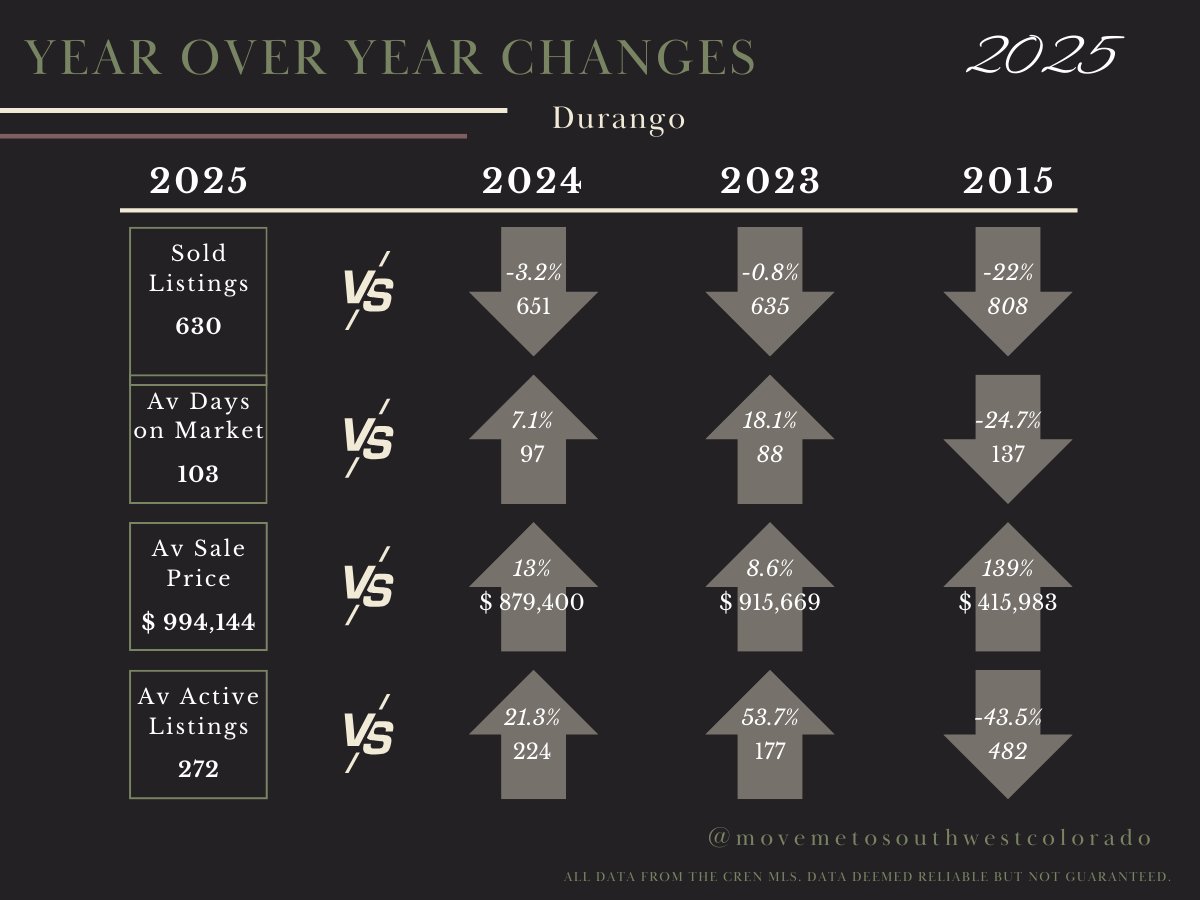
The Data Reality:
In Durango, sellers held the line. Average prices jumped 13% to nearly $1 million ($994,144). However, the market pushed back: sales volume dropped 3.2%.
What This Means for Sellers:
You have pricing power, but you don't have liquidity. Buyers are willing to pay a premium, but they are transacting less often.
-
The Strategy: You cannot rely on a quick sale. With inventory up 21.3% in Durango, you are competing against more neighbors. If you want that premium price, your home must be "turn-key" perfect. If it needs work, you risk sitting on the market as buyers choose the fresher inventory.
What This Means for Buyers:
Don't let the high prices scare you off. The drop in sales volume (-3.2%) suggests that while list prices are high, sellers are feeling the silence. Look for homes that have been on the market past the 103-day average. That is where your negotiation leverage lives.
Playbook 2: The "Value" Strategy (Pagosa Springs & Bayfield)
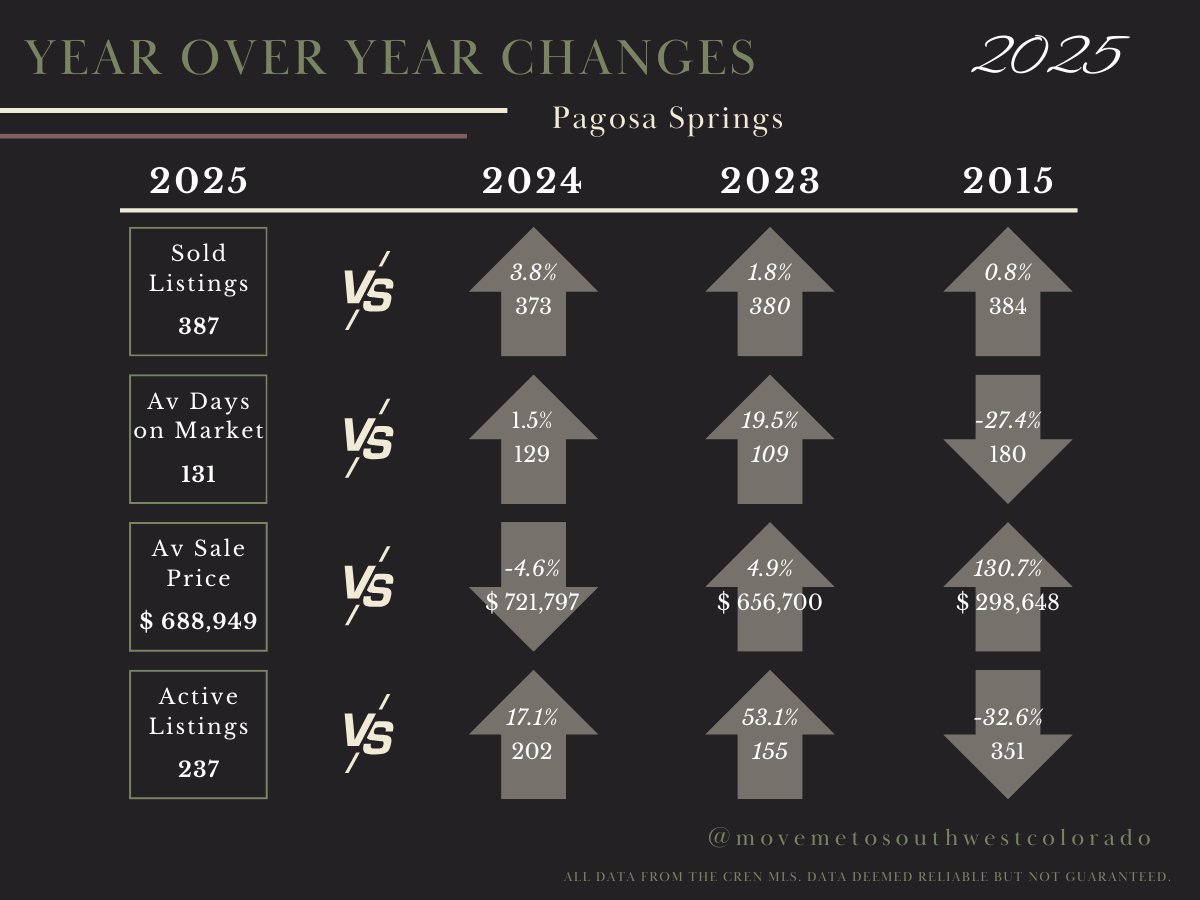
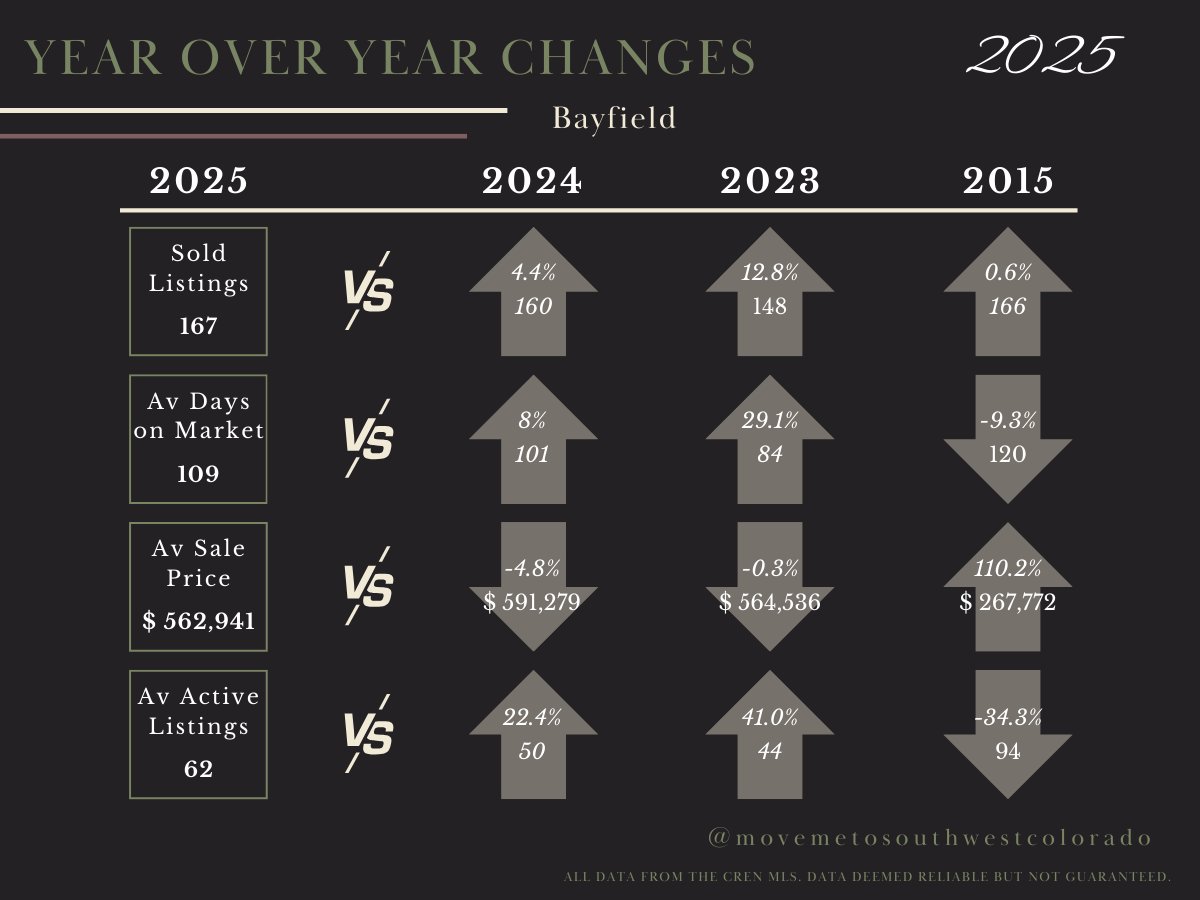
The Data Reality:
Pagosa Springs and Bayfield took a different path. Prices corrected downward—dropping 4.6% in Pagosa and 4.8% in Bayfield. But look at the result: Sales volume increased in both towns (+3.8% and +4.4% respectively).
What This Means for Sellers:
The market has spoken: Price drives action. Sellers who adjusted their expectations in 2025 were the ones who successfully sold.
-
The Strategy: Do not "test" the market with a high price in 2026. The data proves that buyers in your area are value-sensitive. If you price slightly below the competition, you tap into that pool of active buyers who drove sales up last year.
What This Means for Buyers:
This is your "Goldilocks" moment. Prices have softened, and inventory is up significantly (+17.1% in Pagosa, +22.4% in Bayfield). You have choices and better pricing. However, don't wait too long—the rise in sales volume indicates that other buyers have already noticed the value and are stepping in.
The "Universal" Rule for 2026: Patience is Power
Regardless of which town you are in, one statistic governs the entire region: Active Inventory is up 14.5%.
For the first time in years, scarcity is not the primary driver.
-
For Buyers: You have the luxury of comparison. You don't need to waive inspections or rush into a decision. The average home is taking 149 days to sell. Use that time to find the right fit.
-
For Sellers: Adjust your timeline. In 2025, the average days on market jumped 14%. A home sitting on the market for 3 or 4 months is no longer "stale"—it is normal. Patience, consistent marketing, and strategic pricing are the only ways to the closing table.
The Bottom Line
2026 isn't about "good" or "bad" market conditions—it's about alignment. Are you aligning your price with the volume trends in Pagosa? Are you aligning your expectations with the competition levels in Durango?
The data gives us the map. Now we just need to drive.
Need a specific strategy for your home?
Let’s review the comps for your specific neighborhood. Book your FREE 2026 Strategy Session today for a data-driven consultation.