September gave us another good example of why I never like looking at just one number when talking about the real estate market.
Sales were down compared with last year, prices were higher, homes actually moved a little faster across the region, and the number of new listings barely changed.
Then you look at Durango, Pagosa Springs, and Bayfield individually, and each one tells a slightly different story.
Here’s what stood out to me in the September numbers.
Southwest Colorado: Fewer Closings, Higher Median Price
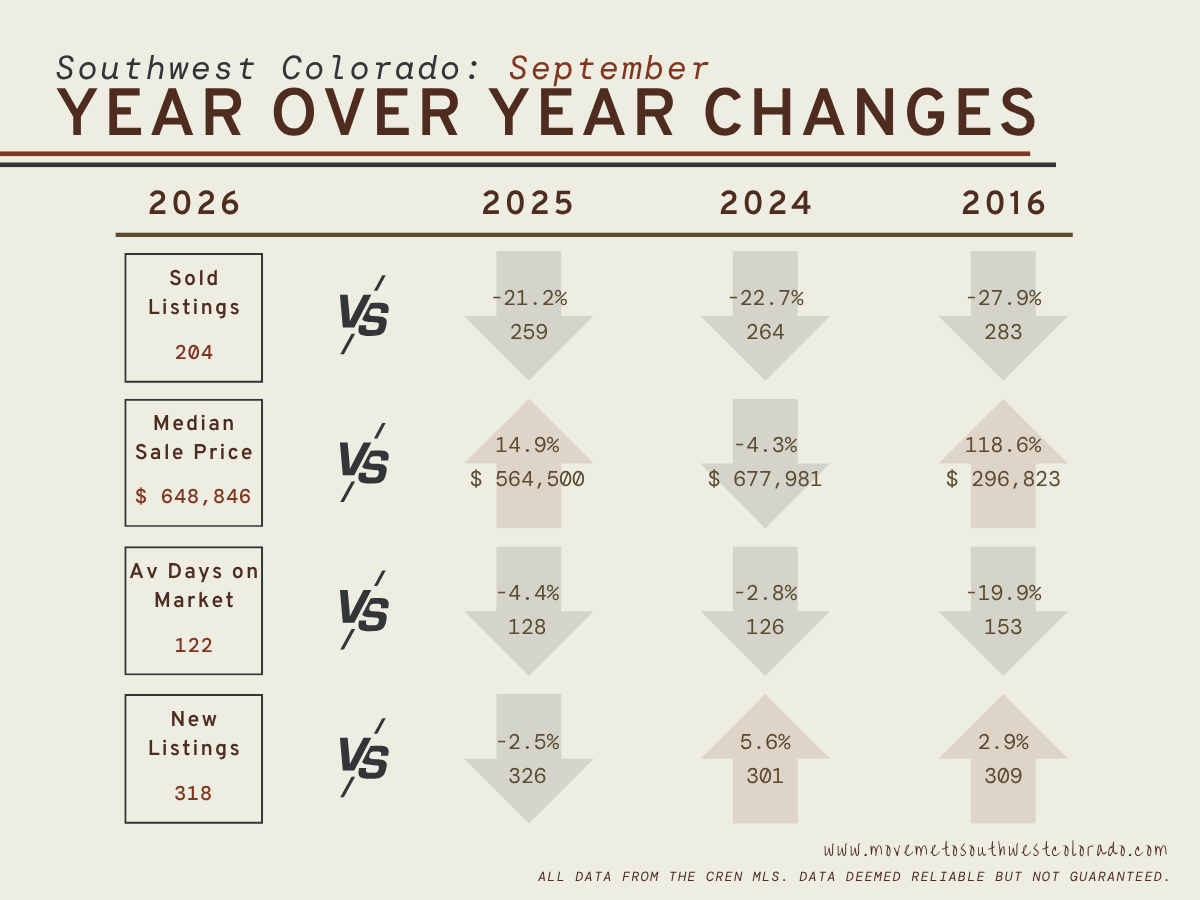
Across the seven Southwest Colorado counties I track, 204 properties sold in September.
That’s down 21.2% from 259 sales in September 2025, and it continues the slower transaction pace we’ve been seeing this year.
At the same time, the median sale price rose to $648,846, up 14.9% from $564,500 a year ago, while the average sale price was just over $1.02 million. That gap between the average and median is another reminder of how much higher-priced sales can influence the overall numbers in a market like Southwest Colorado.
Homes averaged about 122 days on market, compared with 128 days last September, and 318 new listings came on the market compared with 326 last year.
So we had considerably fewer closings, yet prices did not move lower with them.
That’s an important part of the September story.
I also wouldn’t look at the higher median and assume every Southwest Colorado home suddenly appreciated 15% in a year. The mix of properties that happen to close in a particular month can move the median quite a bit, especially in an area with such a wide range of home prices.
That’s one reason I like looking at the quarter alongside the monthly numbers.
Q3 Gives Us a Better Look at the Bigger Picture
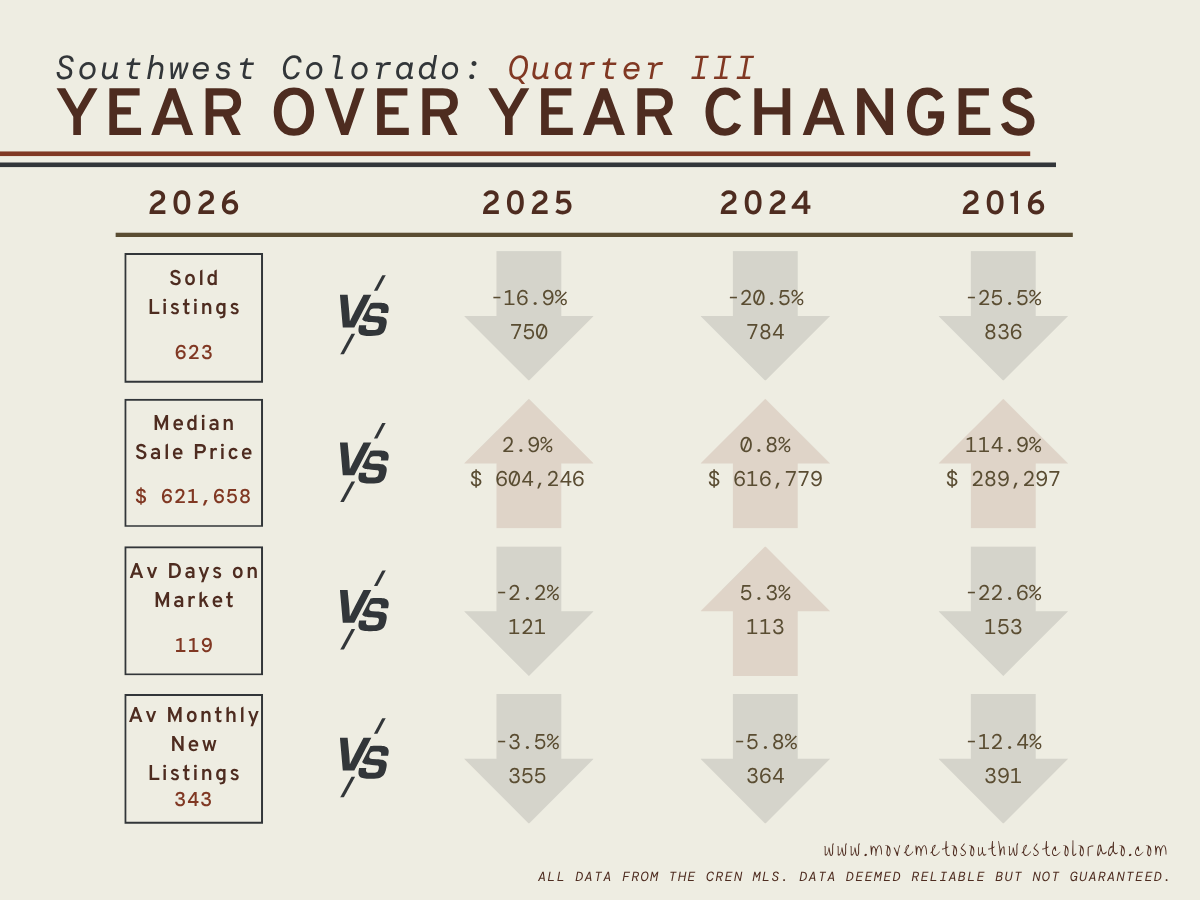
From July through September, 623 properties sold across Southwest Colorado, compared with 750 during Q3 last year. That’s a 16.9% decrease in sales.
The quarterly median sale price was $621,658, up a much more modest 2.9% from $604,246 in Q3 2025.
Average days on market were nearly unchanged at 119 days versus 121, while the average number of new listings per month slipped from 355 to about 343.
That quarterly view is probably a better representation of what I’m seeing overall.
We have fewer transactions happening, but prices have remained fairly resilient.
Go back two years and Q3 sales are down 20.5% from 2024, while the median price is still slightly higher. Compared with Q3 2016, the number of sales is down 25.5%, while the median sale price is more than double what it was then.
With the November election approaching, it’s also possible that some buyers and sellers are taking a wait-and-see approach before making a major financial decision. I wouldn’t read too much into that from the local numbers alone. The data doesn’t tell us how much, if any, of September’s slowdown is election-related, and there are plenty of other factors affecting buyer activity right now.
A Look Around the Counties
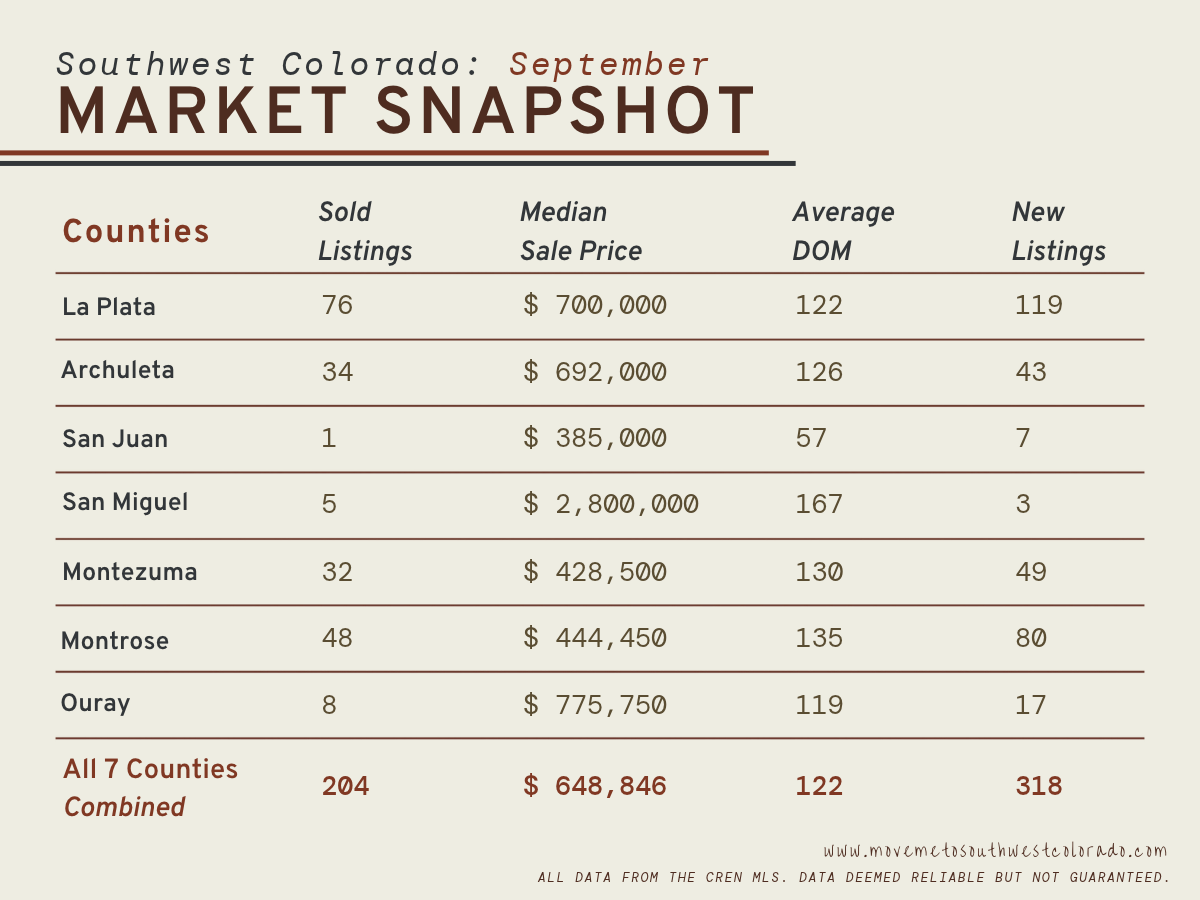
La Plata County remained the busiest county in September with 76 sales, a median sale price of $700,000, and an average sale price of $929,297. Homes averaged 122 days on market, with 119 new listings coming on during the month.
Montrose County followed with 48 sales and a median of $444,450, while Archuleta County had 34 sales with a much higher median of $692,000. Montezuma County recorded 32 sales at a median of $428,500.
At the smaller end of the sample, Ouray County had eight sales, San Miguel had five CREN MLS-reported sales, and San Juan had just one.
That matters when looking at their monthly median prices. With only a handful of transactions, one or two expensive properties can make the numbers move dramatically.
San Miguel is the clearest example: its five reported September sales had a $2.8 million median and an average sale price of about $3.17 million. San Miguel County does not fully disclose all real estate transactions, so these figures reflect the sales reported through the CREN MLS and should not be read as a complete count of county activity.
Durango: Prices Held Up While Homes Took Longer to Sell
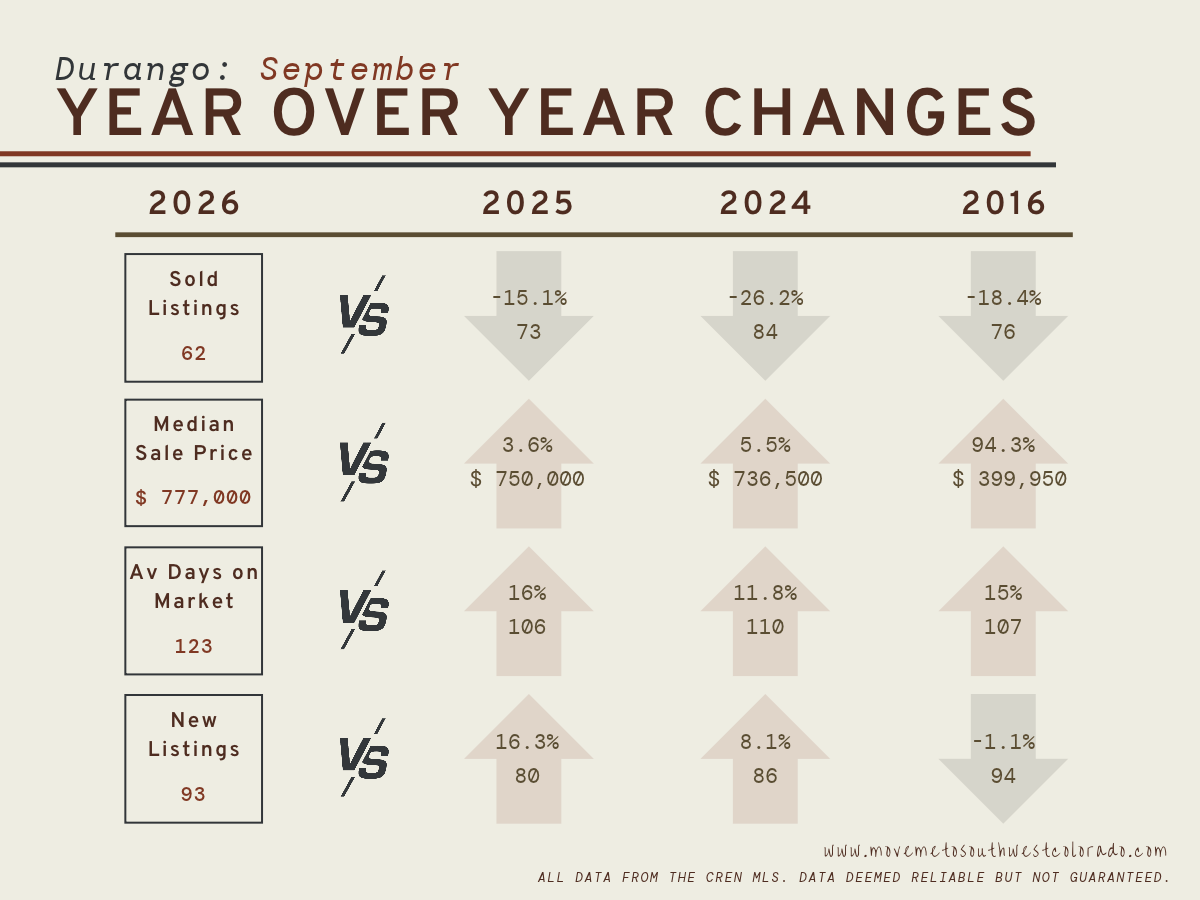
Durango had 62 sales in September, down 15.1% from 73 a year ago.
The median sale price was $777,000, up 3.6% from $750,000 last September, while the average sale price was just over $1.01 million.
Homes took an average of 123 days to sell, compared with 106 days last year, and 93 new listings hit the market compared with 80 in September 2025.
That combination catches my attention.
Durango had fewer closings and more new listings, while homes were taking longer to sell. Prices still held up.
For buyers, that can mean more time to compare properties and potentially more room to have a conversation with a seller, particularly on homes that have already spent some time on the market.
For sellers, it makes pricing from the beginning even more important.
Pagosa Springs: Fewer Sales and Fewer New Listings
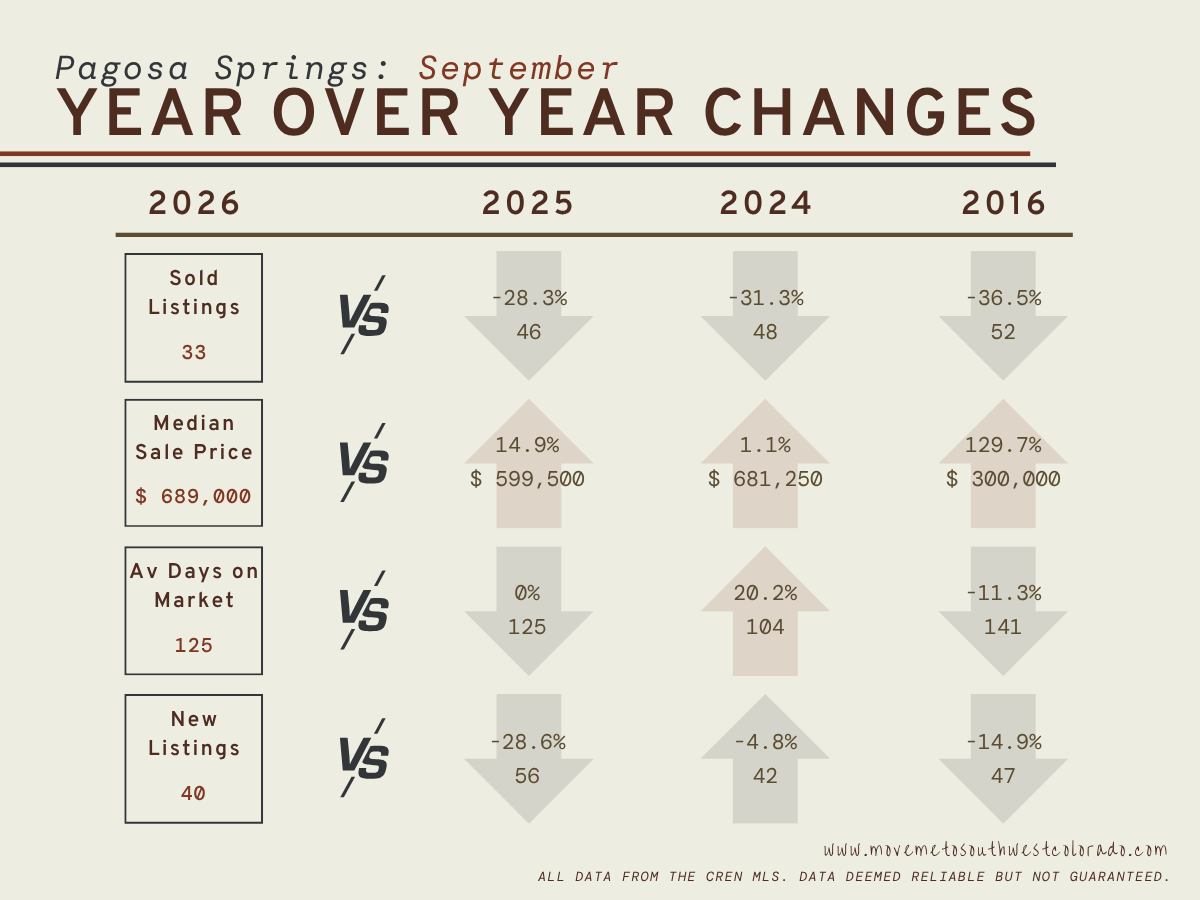
Pagosa Springs had 33 sales in September, down 28.3% from 46 last year.
The median sale price climbed to $689,000, while the average sale price was $814,025. The median was $599,500 in September 2025.
Days on market stayed exactly the same at 125 days, while new listings dropped from 56 last September to just 40 this year.
So Pagosa had fewer buyers closing, but it also had considerably fewer new properties entering the market.
And with only 33 transactions, I’d be careful about reading too much into a 14.9% jump in the monthly median. Which homes happened to close during the month matters.
The bigger takeaway for me is that activity was quieter on both sides.
Bayfield: A Small Number of Sales Can Move the Numbers Quickly
Bayfield is where sample size really matters this month.
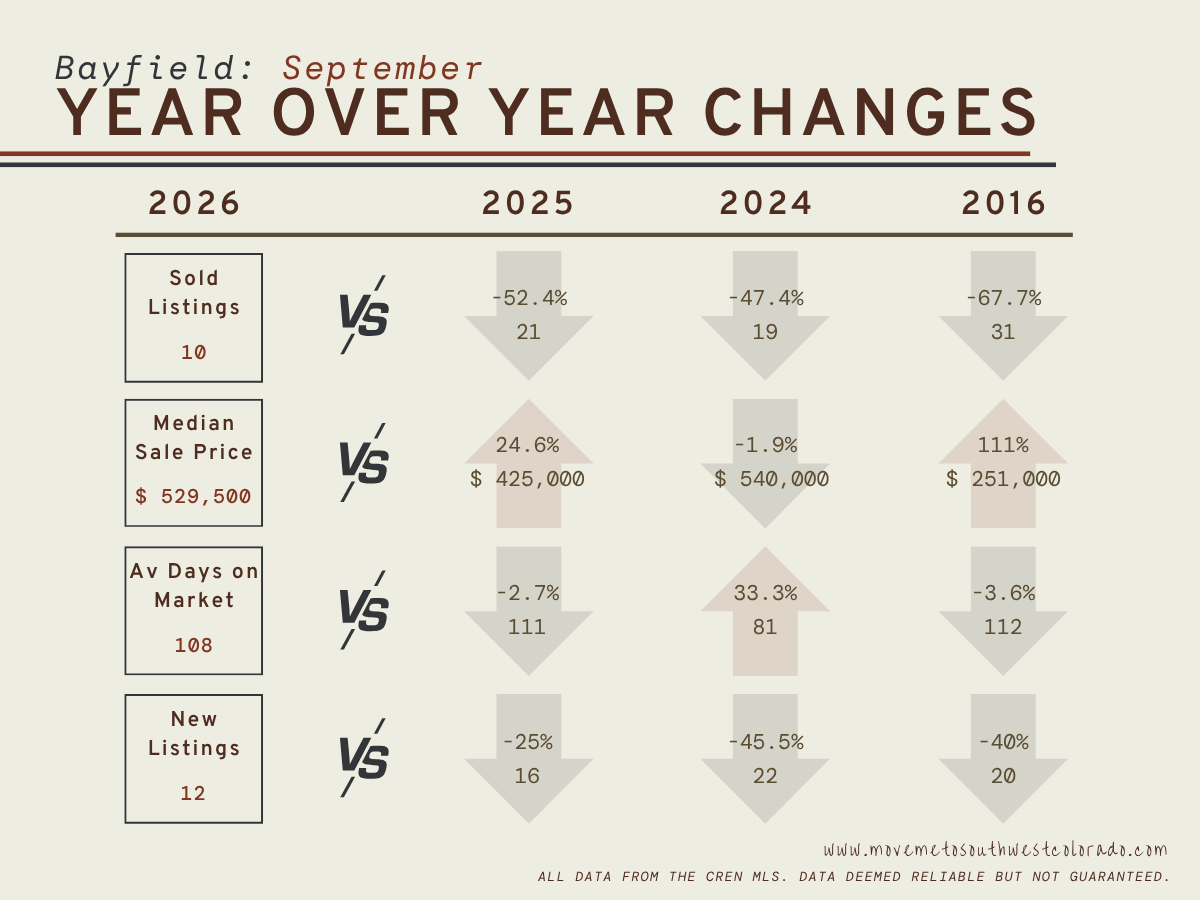
Only 10 homes sold in September, compared with 21 last year—a 52.4% decline.
Yet the median sale price increased to $529,500, up 24.6% from $425,000 a year ago. The average sale price was $571,790.
Homes averaged 108 days on market, slightly faster than 111 days last September, while only 12 new listings came on the market compared with 16 last year.
I would be especially cautious about treating that 24.6% median increase as a broad jump in Bayfield home values.
With just 10 sales, the types and price ranges of the homes that closed can move the median substantially.
It’s still useful information. It just needs context.
What Does This Mean for Buyers?
The market is giving buyers something we didn’t always have a few years ago: time.
Fewer properties are closing, and in several areas homes are spending three or four months on the market.
That doesn’t automatically mean sellers are going to accept a deeply discounted offer. Prices are still holding up surprisingly well in many parts of Southwest Colorado.
But buyers can often spend more time looking at the property, studying comparable sales, watching how long it has been listed, and figuring out where there may actually be room to negotiate.
I’d pay particular attention to homes that have been sitting longer than competing properties, listings that have already had price reductions, and sellers whose timing may matter.
And What About Sellers?
September is another reminder that pricing matters.
There are still buyers in the market, and they are still paying strong prices for the right properties.
There simply aren’t as many transactions happening as there were a year or two ago.
When buyers have more choices and more time, an overpriced property becomes easier to pass over.
For sellers, I’d want to know exactly what similar homes have recently sold for, what the active competition looks like, and how long homes in that price range are taking to sell.
The Bottom Line
September was a mixed market.
We had fewer sales, higher prices, relatively steady new-listing activity, and very different conditions depending on where you look.
The quarterly numbers tell a similar story: transaction volume has slowed noticeably, while home prices have remained much more resilient.
That’s why I wouldn’t describe Southwest Colorado right now with one broad label like a “buyer’s market” or a “seller’s market.”
Durango looks different from Pagosa. Bayfield looks different from both. And even within the same town, your price range and property type can completely change the conversation.
If you’re thinking about buying or selling in Southwest Colorado and want to know what the numbers look like for your specific area, reach out anytime. I’m always happy to dig into the local data with you.